Yarn Weight Chart Explained — Lace to Jumbo, with Photos
The Craft Yarn Council weight chart is the single most useful reference in crochet and knitting. Here's what each weight category means, what it's for, and how to substitute between them.
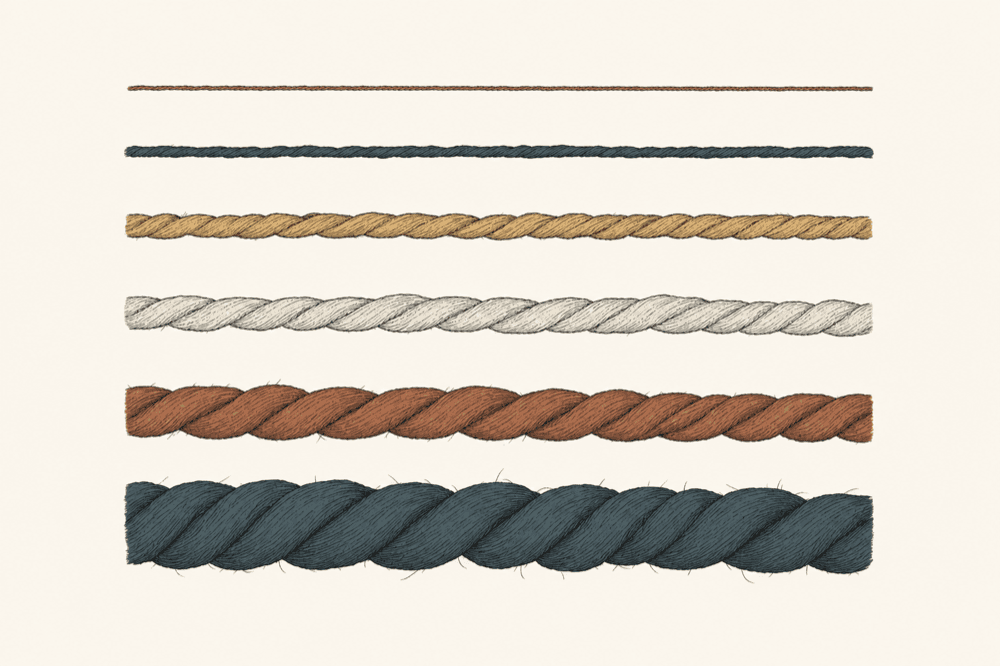
Yarn weight is the single most important variable in any pattern. Get it wrong and your gauge collapses, your sweater fits like a bag, your blanket runs out of yarn three rows from the end. The Craft Yarn Council (CYC) standardized eight weight categories in 2003 and the rest of the industry uses them by default.
The eight categories
| # | Name (US) | Name (UK) | Hook (mm) | Stitches per 4" | |---|---|---|---|---| | 0 | Lace | 1-ply / cobweb | 1.5–2.25 | 33–40+ | | 1 | Super Fine / sock | 2/3-ply | 2.25–3.5 | 27–32 | | 2 | Fine / sport | 4-ply | 3.5–4.5 | 23–26 | | 3 | Light / DK | DK | 4.5–5.5 | 21–24 | | 4 | Medium / worsted / aran | Aran | 5.5–6.5 | 16–20 | | 5 | Bulky / chunky | Chunky | 6.5–9 | 12–15 | | 6 | Super Bulky | Super chunky | 9–15 | 7–11 | | 7 | Jumbo | Jumbo | 15+ | 6 or fewer |
What each is good for
0 (Lace) — fine doilies, intricate filet, lightweight summer shawls. Slow stitching, dramatic detail. Most colorwork charts at this weight feel almost like cross-stitch.
1 (Sock / Fingering) — socks, lightweight shawls, fingerless mitts, baby items. The most common weight for fair-isle knit colorwork. Patterns are detailed but the work is faster than lace.
2 (Sport) — baby blankets, fitted garments, summer tops, lightweight beanies. A sweet spot for fitted apparel that doesn't read as bulky.
3 (DK / Light worsted) — adult sweaters, garter-stitch shawls, beginner amigurumi (some designers prefer DK over worsted because it makes smaller, denser amigurumi). Versatile, beautiful drape.
4 (Worsted / Medium) — the default. Granny squares, scarves, beanies, blankets, average-sized amigurumi, most beginner patterns. If a pattern doesn't specify a weight, assume worsted.
5 (Bulky) — chunky scarves, fast blankets, beginner projects you want to finish in a week.
6 (Super Bulky) — chunky throws, oversized scarves, statement pieces.
7 (Jumbo) — arm-knitting blankets, pet beds, decorative accessories. Each stitch is the size of a small fist.
Substituting between weights
You can sometimes hold two strands of a lighter weight to substitute a heavier one. Two strands of fingering ≈ one strand of DK. Two strands of DK ≈ one strand of worsted. This only works when the doubled yarn matches the gauge — always swatch.
Substituting a heavier yarn for a lighter one in a pattern almost never works without redrawing the entire pattern. Substituting a similar weight (e.g., DK for sport) usually works with a hook size adjustment.
What yarn weight does not tell you
Two yarns at the same CYC weight category can behave very differently depending on:
- Fiber. Wool blooms when blocked; acrylic doesn't. Cotton has zero stretch; merino has plenty.
- Ply construction. A tightly twisted 4-ply worsted will produce sharper stitch definition than a loosely-spun worsted.
- Yardage per gram. Two worsted yarns can have wildly different yards per skein. This matters for both quantity and finished weight.
Use the CYC category as a starting point, then read the band for fiber, yardage, and recommended hook size. And — say it with me — swatch.
Try the converter
Want to see how yarn weight changes a pattern? The StitchingLab converter lets you change weight category and watch the materials estimate update in real time.
Try the converter