The Best Yarn for Amigurumi (and Why It Matters)
Amigurumi has yarn requirements most patterns don't talk about. Here's what actually matters — fiber, weight, twist — and the specific yarns that consistently produce good results.
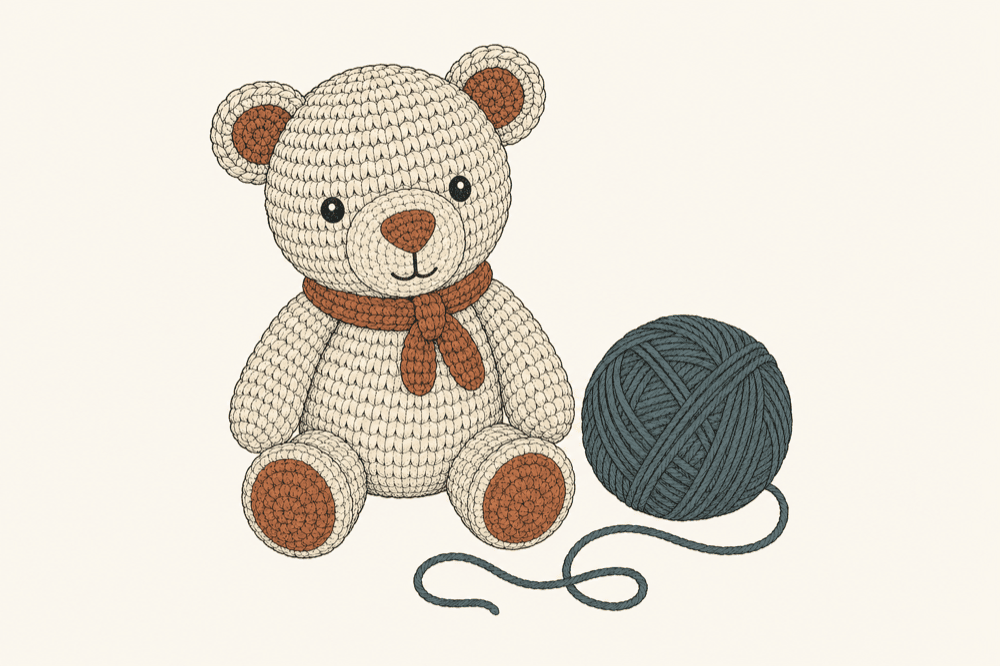
Amigurumi yarn isn't a marketing category — it's a set of practical requirements that most "best yarn" lists fail to cover. Here's what actually matters.
What amigurumi yarn needs to do
- Hold a tight stitch. Amigurumi works at gauges 1–2 hook sizes smaller than the yarn band recommends. The yarn must not split at that tension.
- Hide stuffing. Loose, fuzzy, or thin yarns reveal the fiberfill underneath. The fabric needs to be opaque.
- Show stitch definition. The face is made of stitches. If they blur, the face is mush.
- Take stuffing pressure without distorting. A yarn with too much elasticity will stretch around the stuffing and lose its shape.
- Photograph well. This is real. Most amigurumi exists to be photographed and gifted.
These constraints rule out most fluffy, hand-spun, novelty, or boutique yarns.
The two right answers
Cotton (CYC 3 — DK / sport)
The amigurumi standard. Stylecraft Special DK, Paintbox Cotton DK, DMC Natura Just Cotton XL are all reliable. Cotton has zero elasticity (excellent for shape retention), shows stitch definition sharply, and photographs cleanly.
The downside: cotton splits easily at small gauges, and it's harder on your hands. Mercerized cotton (a finishing process that smooths the fiber) reduces splitting and is worth the small price premium.
Premium acrylic (CYC 4 — worsted)
Lion Brand Vanna's Choice, Knit Picks Brava Worsted, Caron Simply Soft, Bernat Super Value. Acrylic is more forgiving than cotton — it has slight elasticity, doesn't split at tight gauges, and is much cheaper. The trade-off: stitch definition is fuzzier, and the finished piece reads less crisp in photographs.
For beginners and large-scale amigurumi (any toy bigger than a hand), worsted acrylic is usually the right call. For small, detailed amigurumi (tiny animals, character figures), cotton DK wins.
What to avoid
- Boucle, eyelash, or fluffy yarns. They hide every stitch and the texture fights the form.
- Wool with extreme bloom (Lopi, Brooklyn Tweed Shelter, Cascade Eco). Beautiful for sweaters; the bloom obliterates amigurumi face stitches.
- Lace or fingering weight. Too thin to hide stuffing.
- Bulky or super bulky. Too few stitches for fine shaping.
- Cheap acrylic. Walmart-tier acrylics tend to split and pill. The $3 difference per skein is worth it.
The hook-size trick
Whatever yarn you pick, drop one to two hook sizes from the yarn band's recommendation. A worsted that the band says "use 5.5mm" gets a 4.0mm or 4.5mm for amigurumi. The fabric tightens, stitches sharpen, the stuffing stays hidden.
If your hand fatigues fast at the smaller size, try a yarn one weight category lighter — it's easier on the hand and produces a similar finished density.
A starter set we recommend
For someone making their first amigurumi, the right shopping list is:
- One worsted acrylic in cream or white (skin/face base color)
- Two contrast colors for accents
- A 4.0mm ergonomic hook
- Polyester fiberfill stuffing
- A pack of safety eyes (6 or 9 mm)
- Yarn needle for sewing parts together
Total: ~$25.
Try the converter
Have a face you'd like to amigurumi-ify? You can't literally run a face through a 3D crochet generator (that's v2), but you can drop a photo into the StitchingLab converter at filet or tapestry to get a flat chart you could use as a graphgan-style applique panel.
Try the converter